Call an operator
We will put you in touch with an operator from your sector. Ask them anything — we do not need to be present.

See where the technology is already working, what it was designed to solve, and what was measured in real operation. For selected projects, we can also arrange a site visit or direct contact with the operator.
To this day, with regular service intervals.
By arrangement directly with the operator.
Karviná and Olešná aquapark.
Verified to Austrian regulatory requirements, in cooperation with BWT.
The best answer to "did it actually work somewhere?" does not come from us. It comes from the operator who lives with the technology every day — and who will also tell you what needed adjusting along the way.
We will put you in touch with an operator from your sector. Ask them anything — we do not need to be present.
A site visit is possible at all listed installations. Karviná and Olešná aquapark are the most frequently visited.
Before committing, the technology can be verified on your actual water. A reference from someone else's site is not the same as a result on your source.
Every water source, building, and operating regime is different. A reference therefore does not automatically promise the same result elsewhere.
What it does show is that the technological principle has been deployed or verified on real water — from drinking water and wells through pool circuits to advanced wastewater polishing.
For each installation we therefore state what type of evidence it represents. A long-running operational reference and a laboratory result do not carry the same weight, and there is no point pretending otherwise.
The strongest evidence of long-term deployment in a specific installation.
Before-and-after results with stated conditions and parameters.
A test on real water that informs the design of the next technical step.
Evidence of effect in a defined test — not an automatic guarantee of operational performance.
Sand-filter backwashing discharges water that is chemically sound — and already heated. A recovery line captures it, polishes it, and returns it to operation along with the heat it carries.
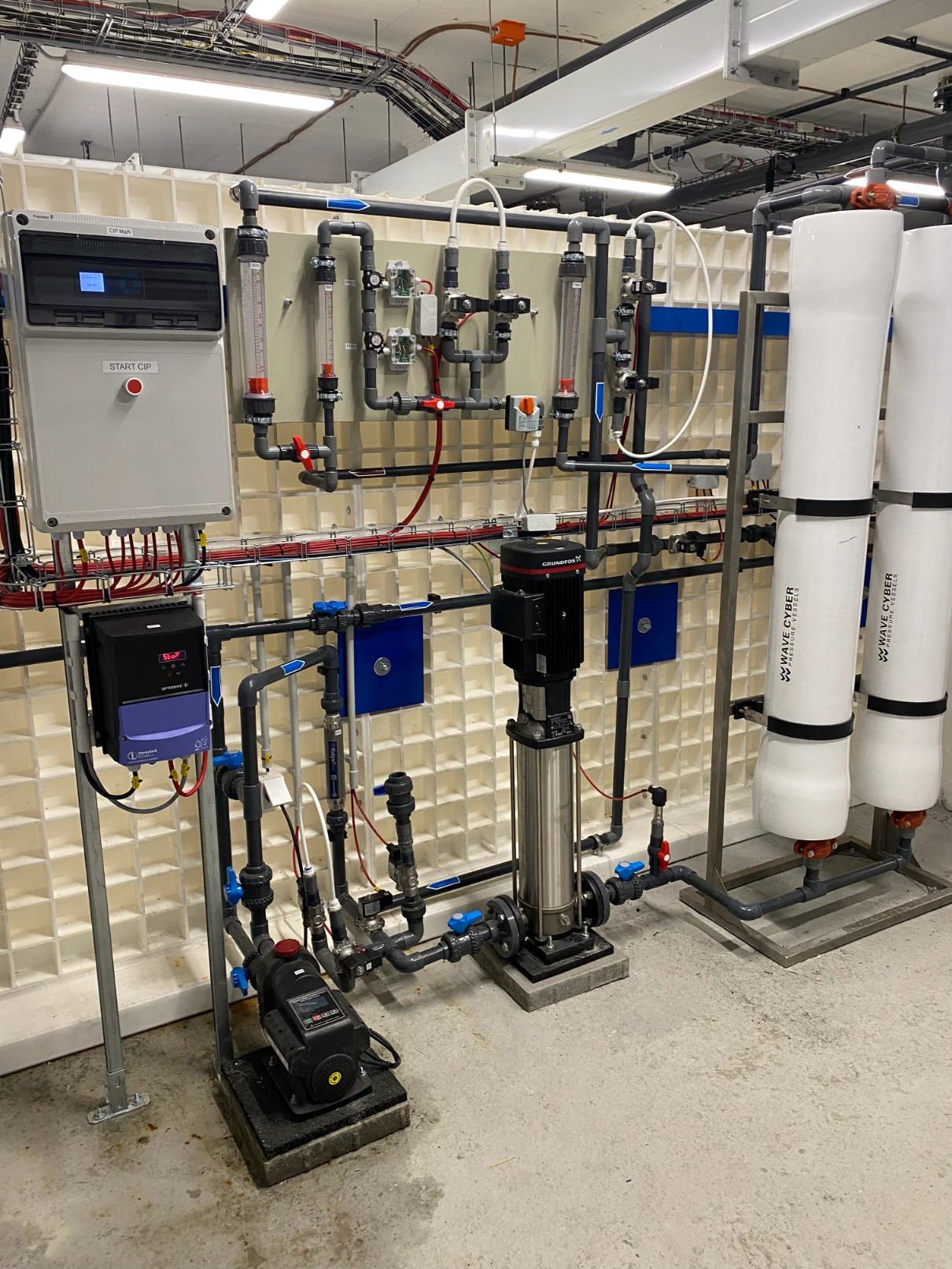
Two units with remote monitoring process backwash water from five pool circuits. The operator pays neither for the water discharged nor for reheating it.
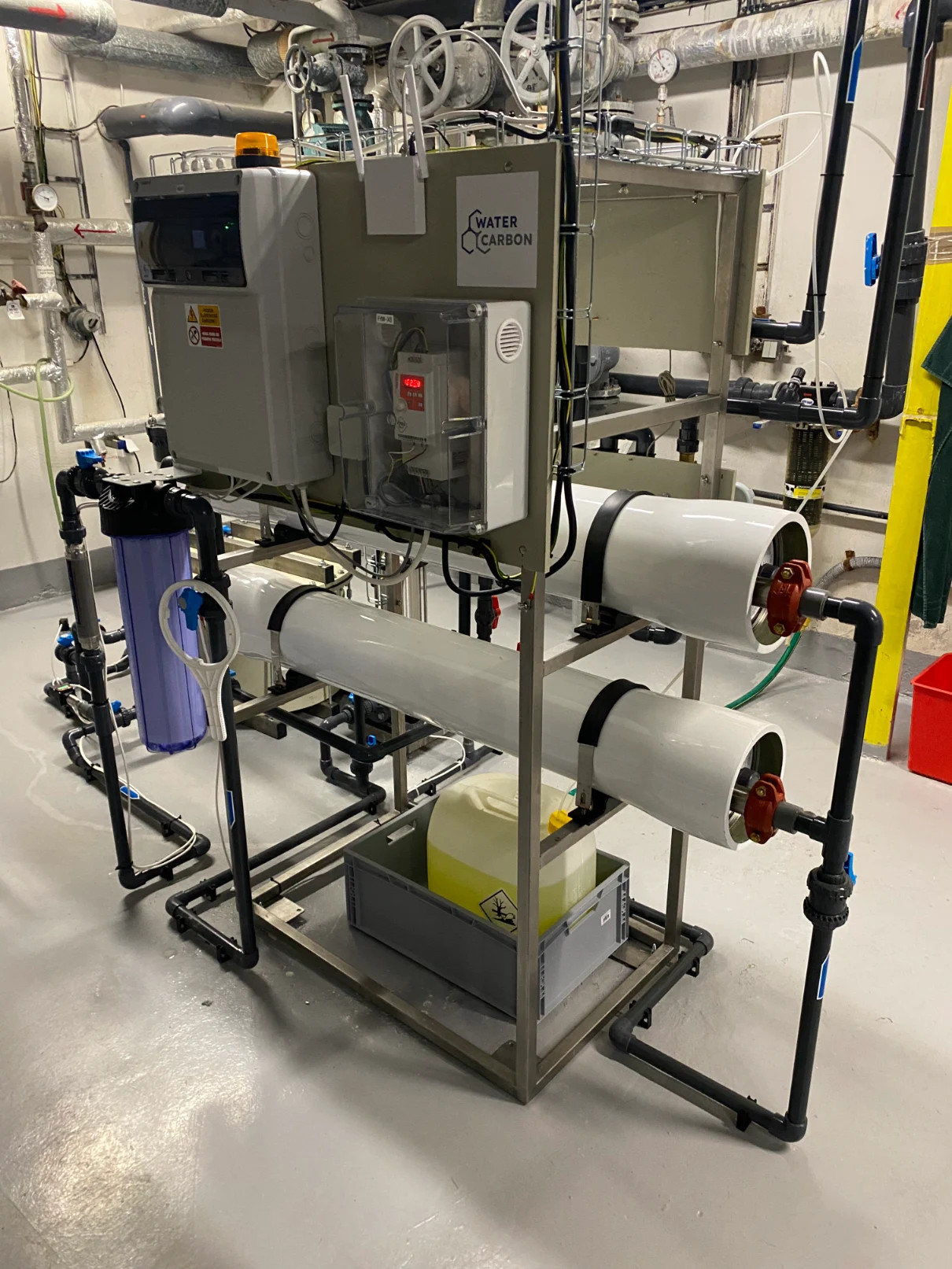
Deployed in cooperation with BWT and verified to the requirements of Austrian regulatory authorities — a different legislative environment from the one in which the technology was developed.
The highest daily processing volume of the pool installations listed. Continuous operation with remote monitoring.
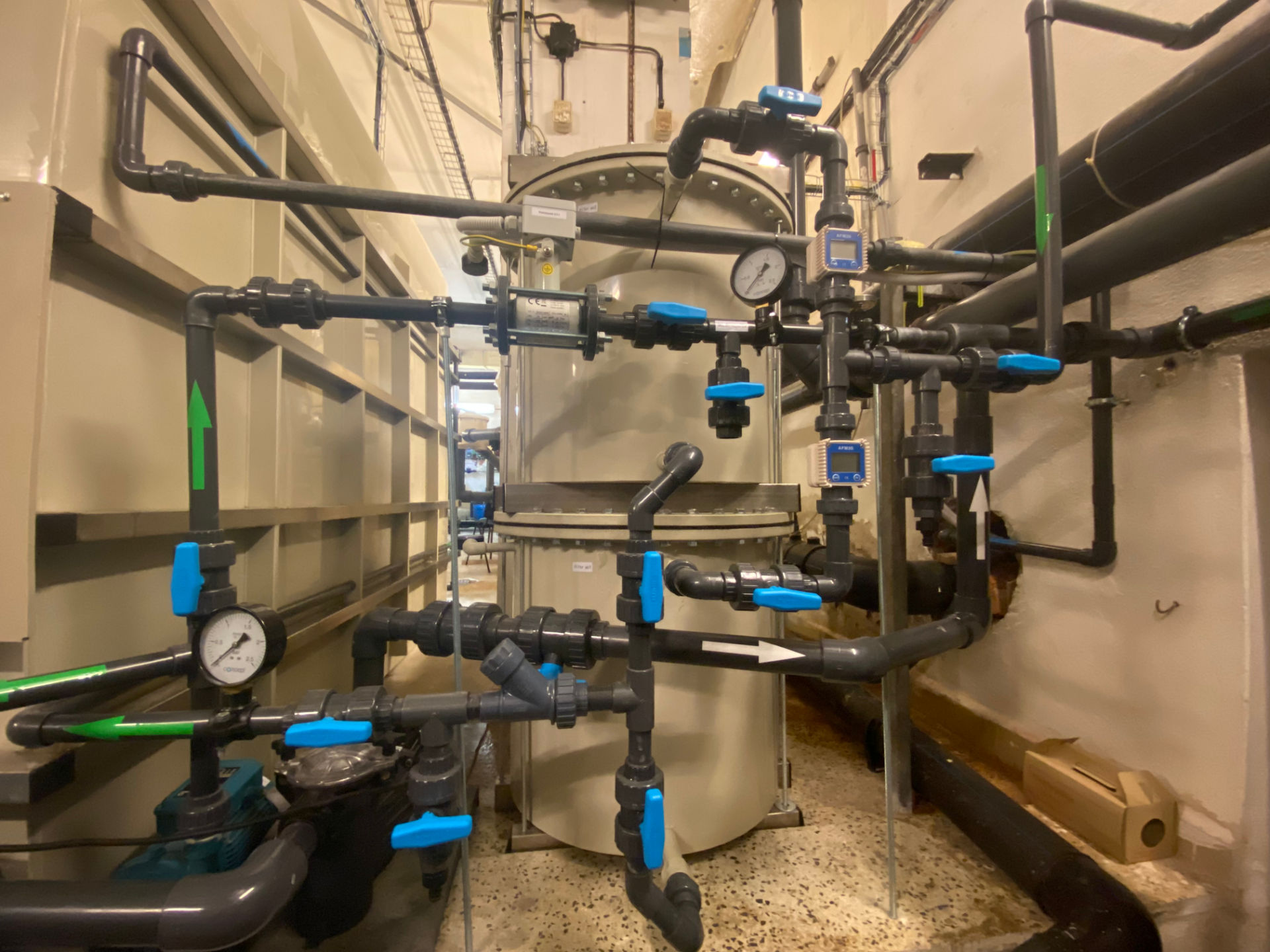
Modular configuration fitted into the limited space of the existing plant room. Recovers both backwash water and whirlpool water, without structural modification to the building.
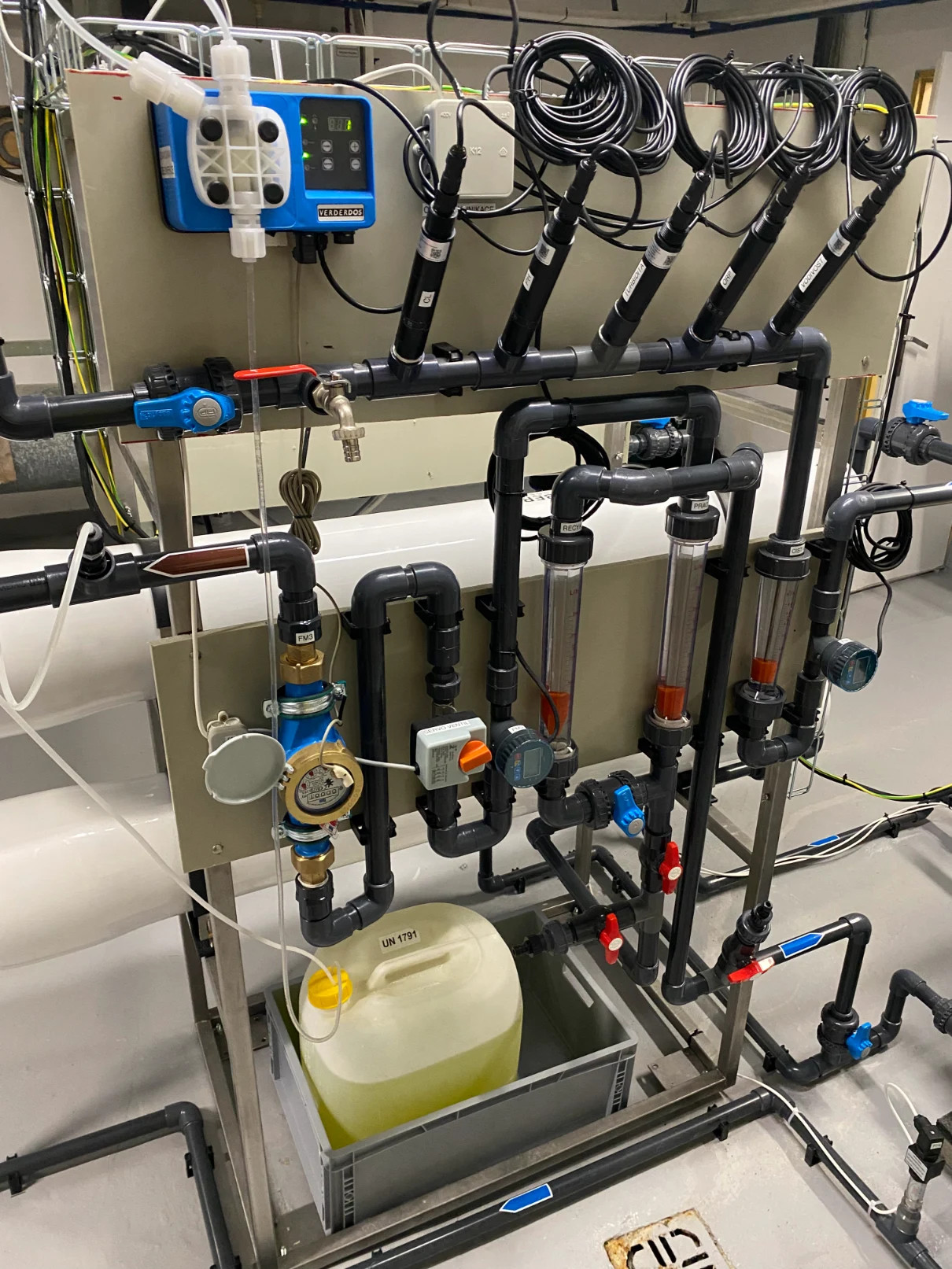
Smaller installation with continuous operation. The waste stream from the recovery line can additionally be reused for sand-filter backwashing.
Operation subject to stricter hygiene requirements than a public swimming pool, in fully automatic mode with remote monitoring.
The Karviná and Olešná aquapark installations were featured in a television report. Both are among the most frequently visited sites — if you want to see the technology running, this is typically where we start.
Combined chlorine, chlorates, and chlorine-resistant microorganisms are three problems that pool operations typically answer with higher disinfectant dosing. More chlorine, however, produces more by-products — it does not produce cleaner water.
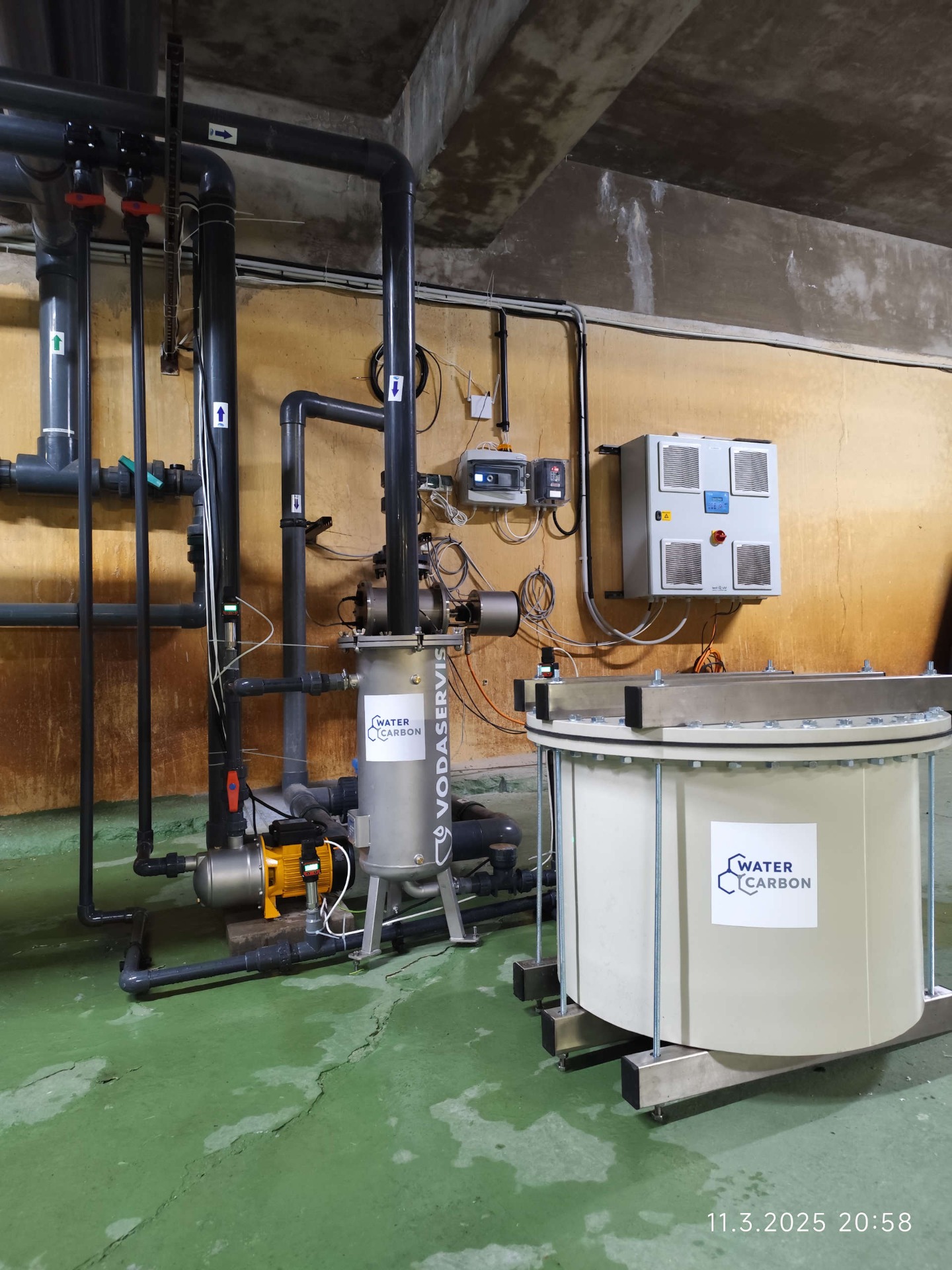
Automatically controlled bypass system integrated into the circulation circuit. Combined chlorine is what is noticeable above the water surface and what irritates eyes and airways.
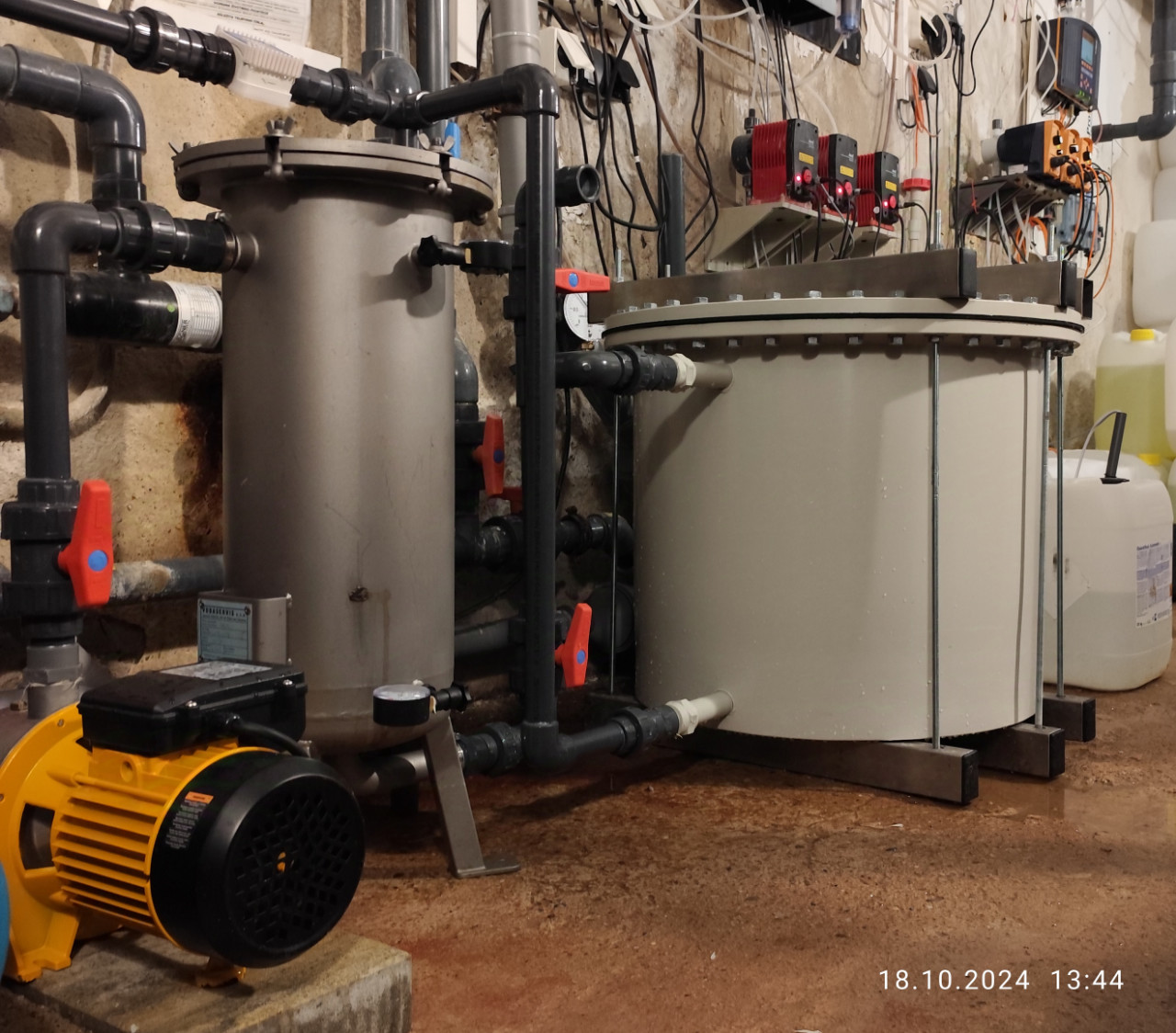
Installed as a bypass on a system burdened with chlorine-resistant bacteria and legionella — in a situation where standard disinfection had persistently proved insufficient.
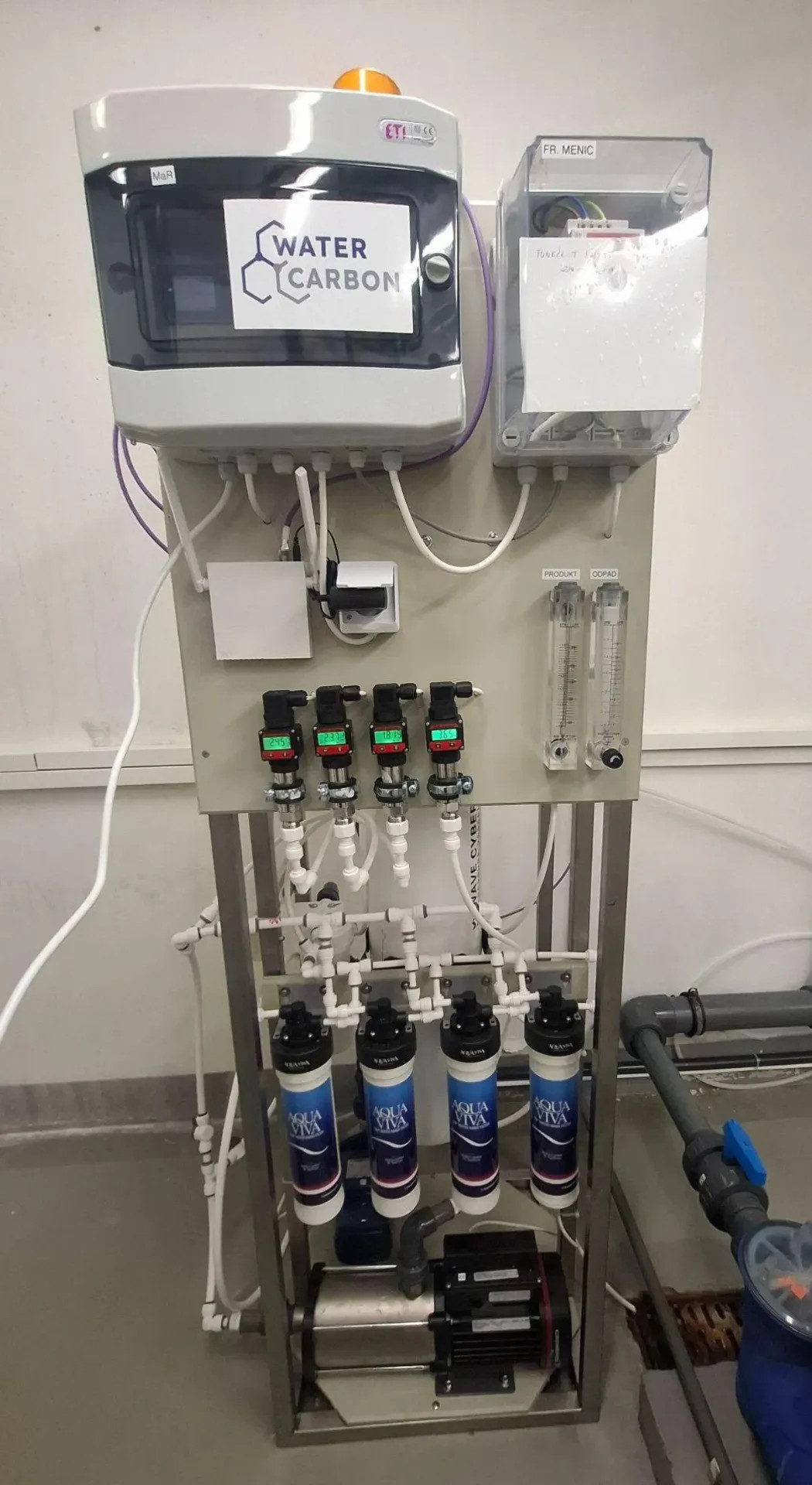
Running on bypass to the circulation circuit in automatic 24/7 mode with remote monitoring, requiring no manual intervention.
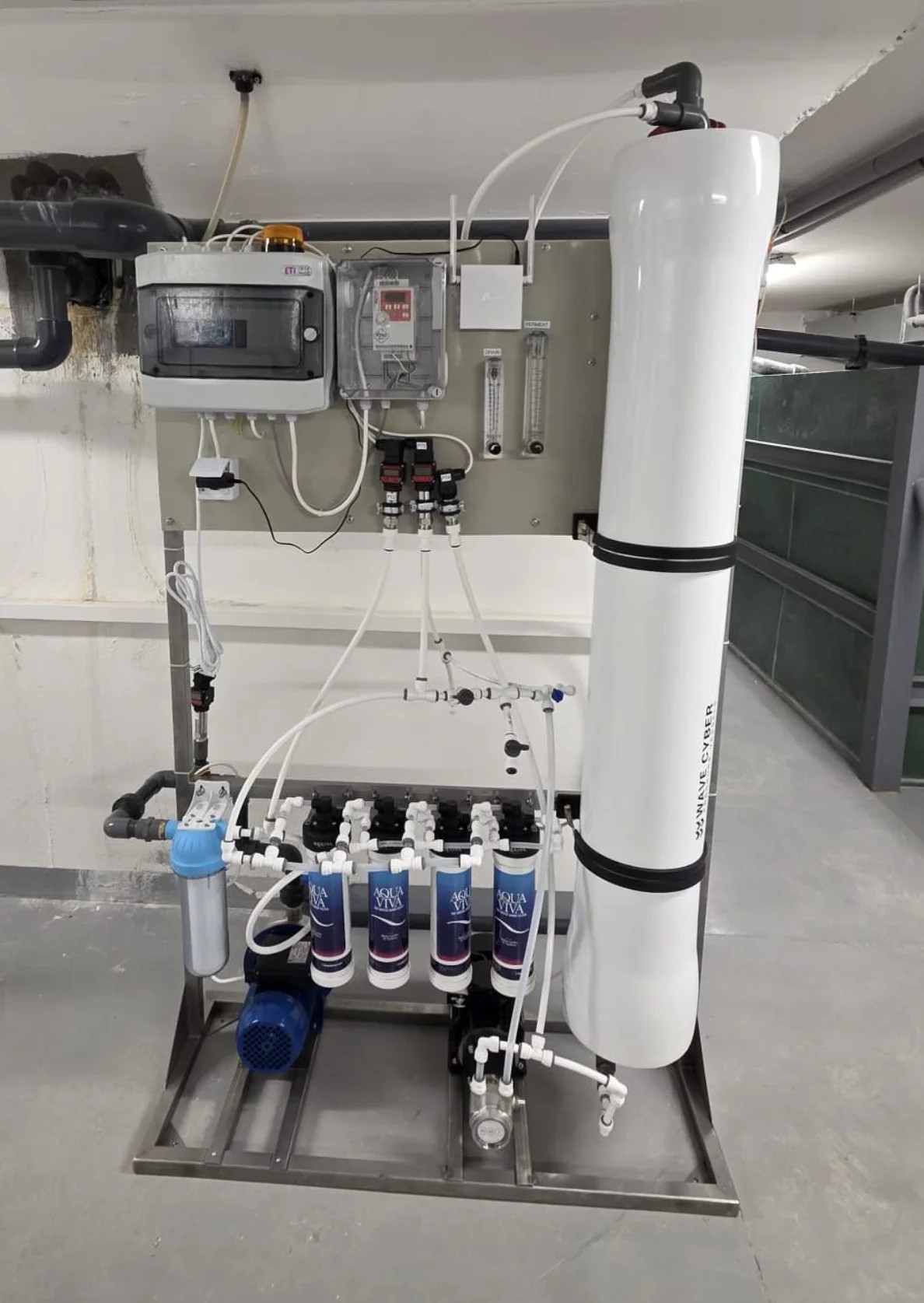
Water treatment for a rehabilitation pool in automatic 24/7 mode with remote monitoring.
Numbers make sense only once it is clear the technology actually runs somewhere. With pool water recovery, three things are saved simultaneously: water that is not discharged, sewerage charges that are not paid for it, and heat that stays in the water. The third is frequently underestimated and typically carries the most weight in the saving.
The installation was co-financed by a state subsidy.
The installation was co-financed from an operational programme focused on sustainable water management.
Figures are based on operational data from specific installations. Transferability to another building depends primarily on local water and sewerage tariffs, the thermal regime, visitor numbers, and the backwash method used. We will prepare an indicative calculation from your figures — and if the result shows the investment will not pay back within a reasonable horizon, we will say so.
Deployed for pesticide removal from drinking water and verification of stable output in a municipal waterworks environment.
Polishing of water with a pesticide load in a production environment with strict quality requirements, where water is both raw material and product.
Well water requiring assessment not only of taste but also of organic content, microbiology, and system stability.
Further installations and pilot projects cannot always be published with the customer name or detailed operating figures. We therefore list only references and parameters that can be communicated responsibly.
The wastewater solution combines pre-treatment, ultrafiltration, adsorptive action of carbon nanotubes, their subsequent separation, and regeneration.
Pilot verification used wastewater from Prague WWTP – Císařský ostrov. The results demonstrate the potential of the technology for targeted capture of selected pharmaceuticals, micropollutants, and part of the biological load.
This result is not a universal guarantee for every wastewater. The design must always be based on the specific composition, treatment goal, hydraulics, and verification on the actual stream.
The pilot unit exists and is in operation. Its configuration, operational data, and the conditions for verification on your water are discussed on request — directly between the investor's engineers and our specialists.
The results shown apply to a specific water source, specific hydraulics, and a specific operating regime. On a different site they may be better or worse — which is why, for larger projects, we insist on verification on your water rather than adopting someone else's numbers.
Equally, the technology does not handle everything. Where adsorption on a carbon-based medium is fundamentally limited, we say so directly and propose a combination with a different treatment stage.
Tell us what water, facility, or operating problem you are dealing with. We will identify the most relevant reference, arrange a site visit or operator contact where appropriate, and define the next verification step for your water.